
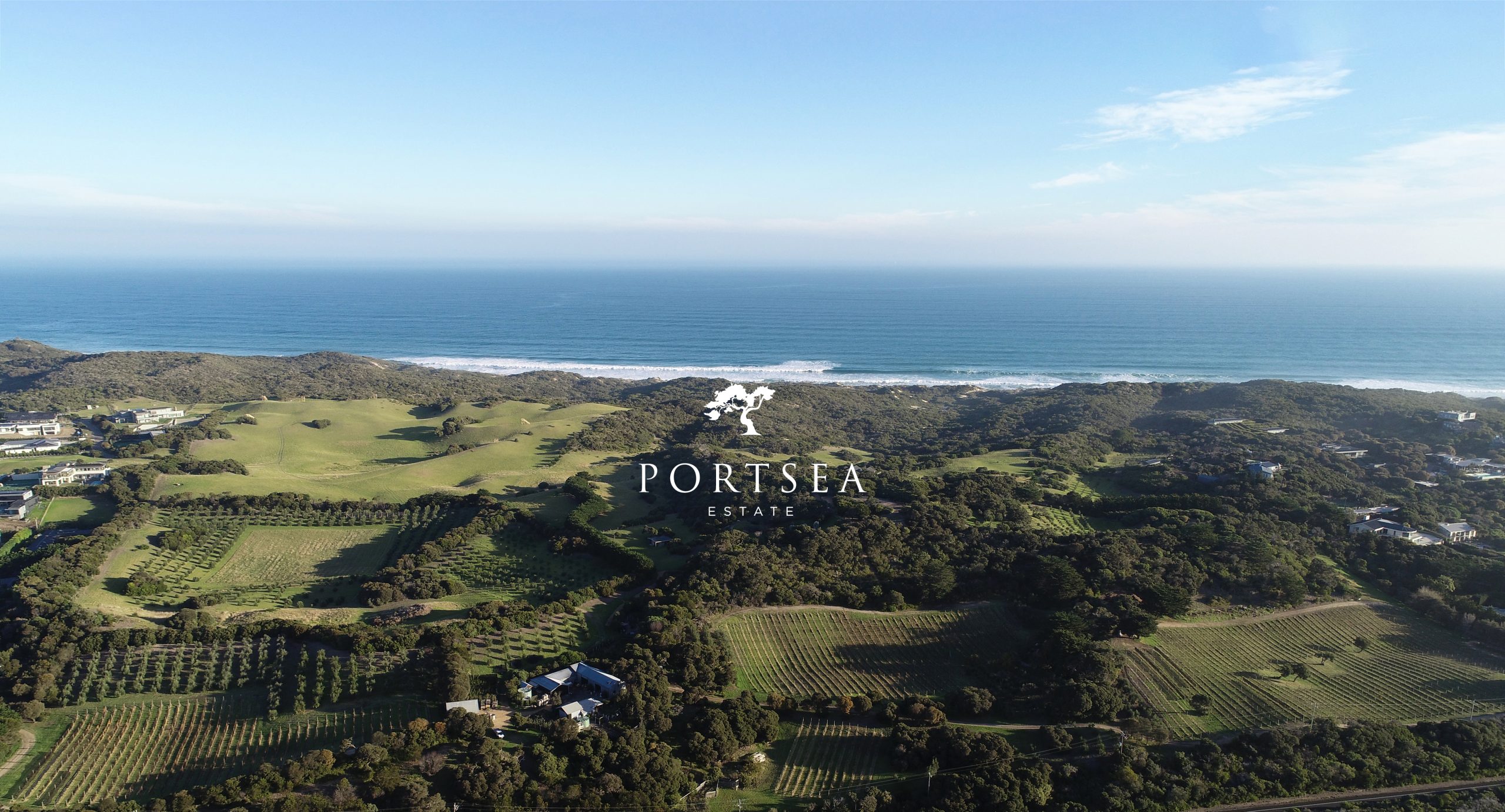
P O R T S E A E S T A T E
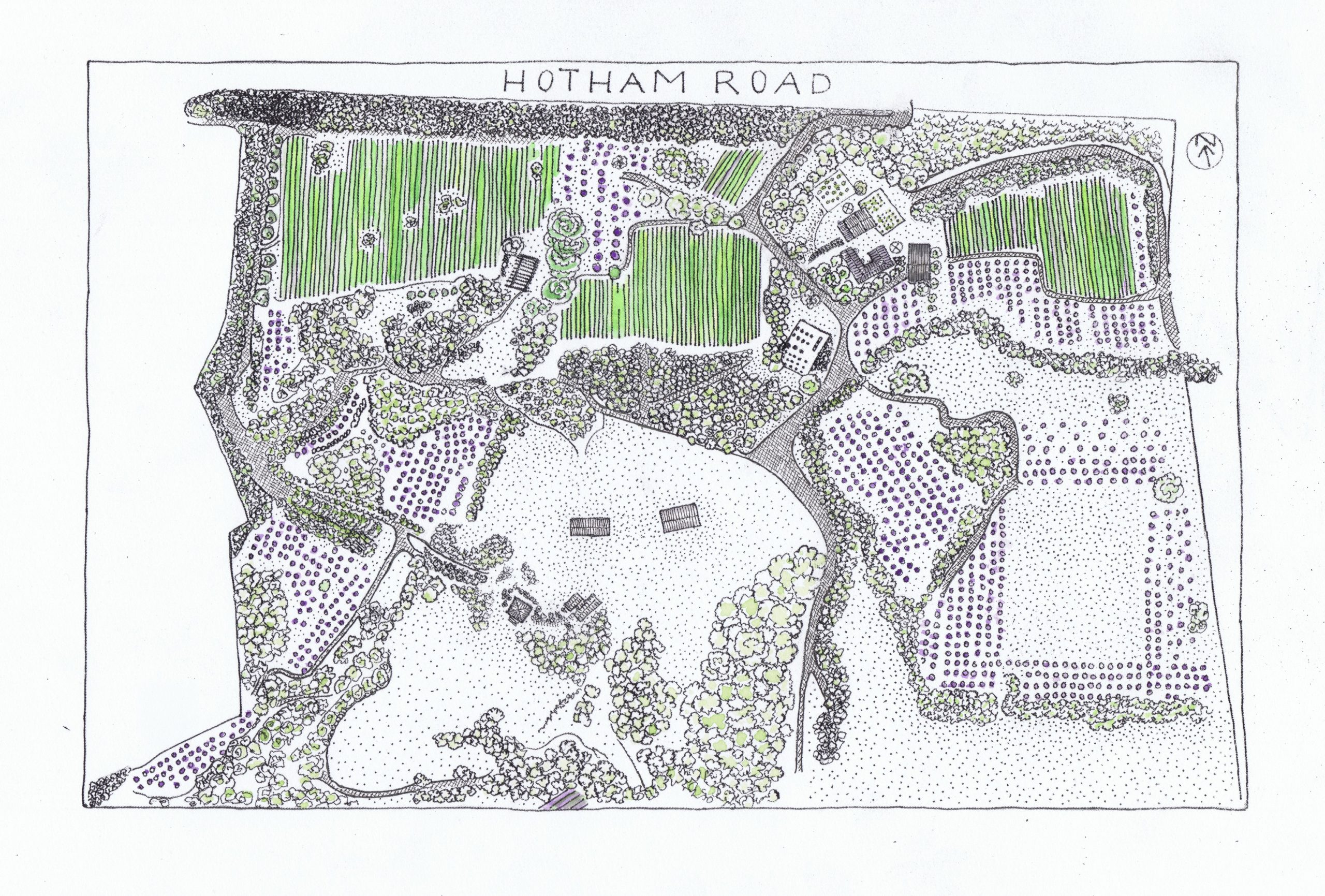
Planted in 2000 The Portsea Estate vineyards are located on the southern tip of Victoria’s Mornington Peninsula, overlooking Bass Strait. A family farm for over 100 years, our original Portsea Vineyard is shaped by ancient limestone deposits, calcareous sands and humus-rich topsoil formed over thousands of years.
At an elevation of 30 metres, the vineyard’s north and south-facing rows are planted with Pinot Noir, Chardonnay and Tempranillo, varieties well suited to the site’s distinct conditions. The unique soils at Portsea Estate heavily influence the wine flavour profiles and drive our highly intentional regenerative farming practices.
As the delicate soil is highly prone to erosion, we use ustilise under-vine line trimming rather than aggressive cultivation. Cover crops are allowed to grow tall to push roots deep into the limestone layer, feeding the block’s rapidly increasing, delicate subterranean mycorrhizal fungal networks. The broader site is supported by an on-site nursery breeding over 20,000 indigenous Moonah and Banksia trees to re-establish the area’s native woodland ecology.
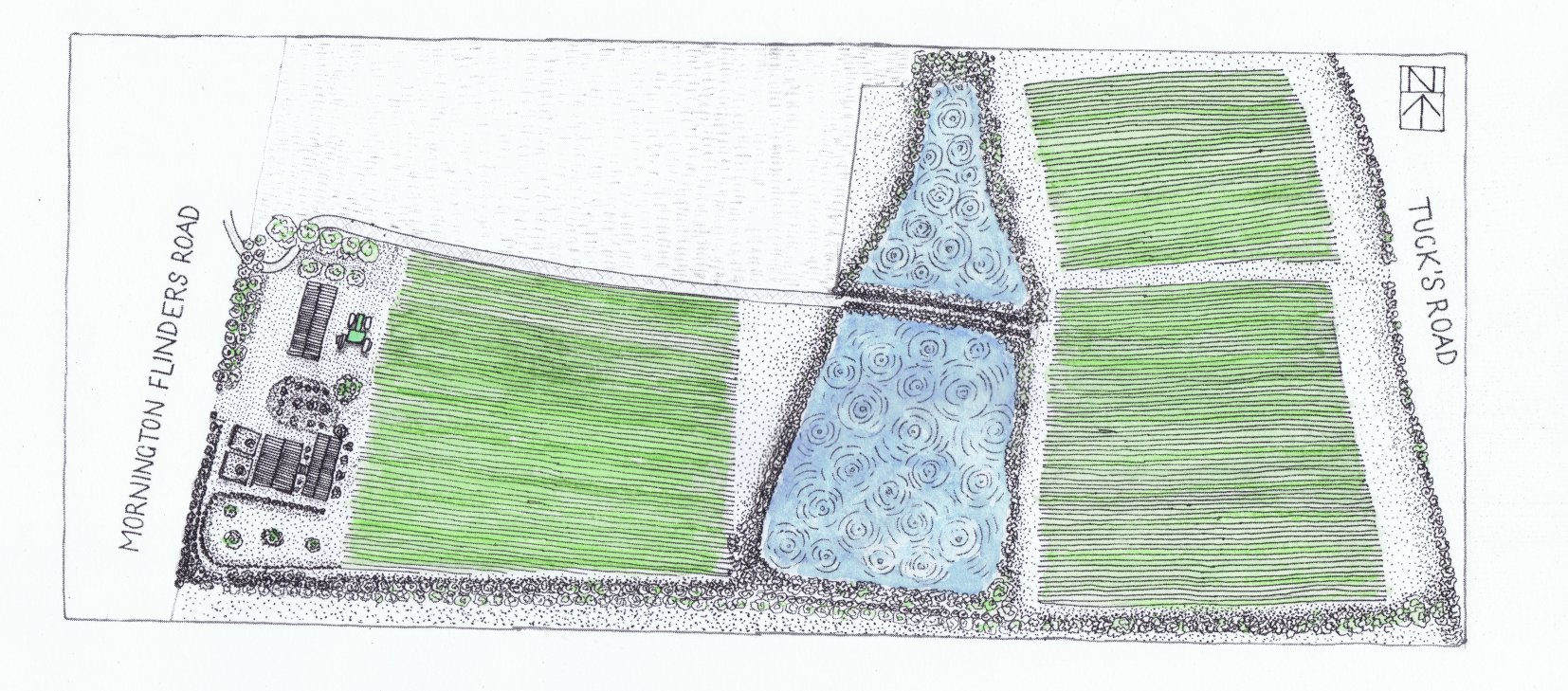
M A I N R I D G E
Our Main Ridge Vineyard offers a contrasting expression of the Peninsula, planted on ancient basalt-derived soils with underlying clay. At 172m elevation our vineyard sits along the Mornington–Flinders Road in Main Ridge, at the heart of the Mornington Peninsula’s elevated wine country. The area is characterised by rolling hills, sheltered valleys and a cool maritime climate, creating a distinctive environment for cool-climate viticulture.
Planted in 1997, 2017 and 2022 our east- and west-facing vineyard sites experience the Mornington Peninsula’s cool climate from different perspectives. The east-facing vines greet the morning sun, warming gradually through the day, while the west-facing slopes receive greater afternoon exposure as the day progresses.
These subtle differences in aspect influence sunlight, temperature and ripening, creating distinct microclimates within the estate. Combined with elevation, slope, soil and coastal influences, they contribute to the diversity and character of fruit grown across the property which includes Pinot Noir, Chardonnay and Pinot Gris.
Between the east and west-facing vineyards lies Manton’s Creek, an important part of the landscape we are actively regenerating. Restoring the creek and its surrounding habitat is helping to strengthen biodiversity, improve the health of the waterways and reconnect the natural landscape between the vineyards.
Across Portsea and Main Ridge we farm according to regenerative viticultural principles and are certified under Sustainable Winegrowing Australia, nurturing healthy soils, biodiversity and the natural balance of our vineyard ecosystems for generations to come.
M O R N I N G T O N P E N I N S U L A
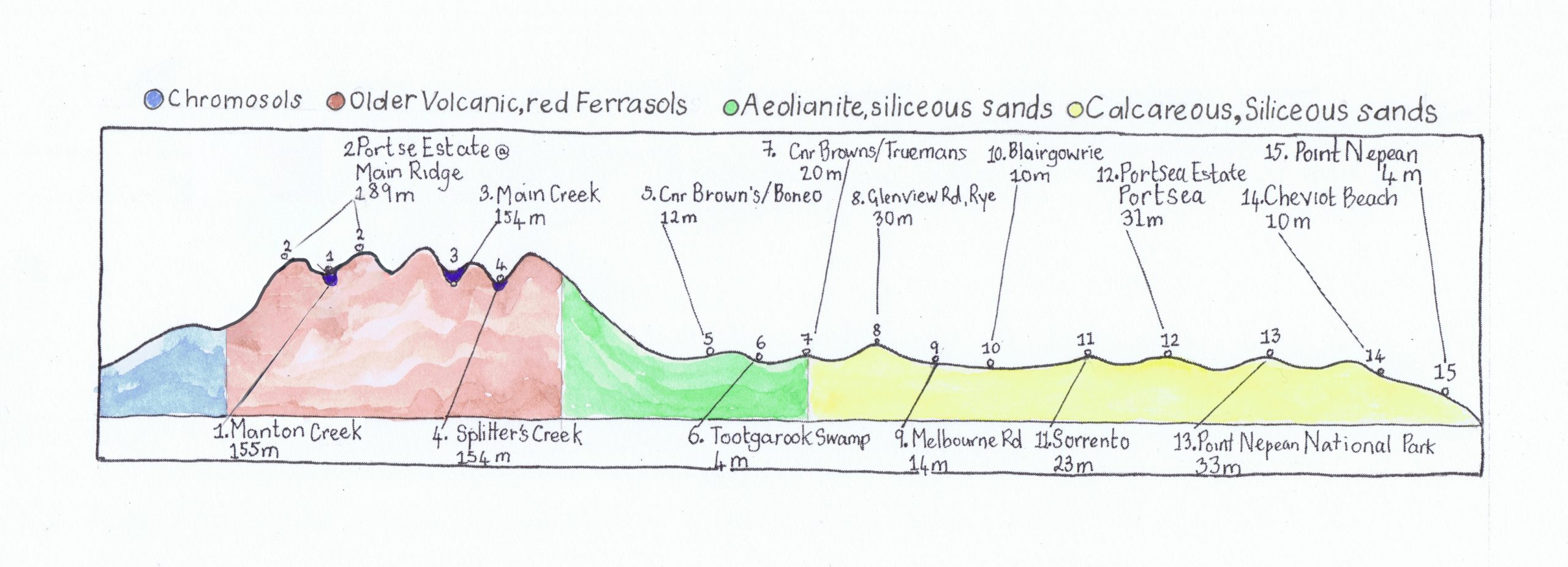
S O I L T Y P E P R O F I L E
This map illustrates the changing geology and elevation of the Mornington Peninsula, from the elevated, older volcanic red Ferrosols of Main Ridge to the lower-lying sandy and calcareous soils towards Portsea and Point Nepean. It highlights the Peninsula’s diverse landscape, with elevations falling from around 155 metres at Manton Creek to just 4 metres at Point Nepean.
Recent Releases
DISCOVER MORE ABOUT OUR
BEAUTIFUL ESTATE

Warning
Under the Liquor Control Reform Act 1998 it is an offence, to supply alcohol to a person under the age of 18 years (Penalty exceeds $17,000), for a person under the age of 18 years to purchase or receive liquor. (Penalty exceeds $700)!
Licence No. 36155772